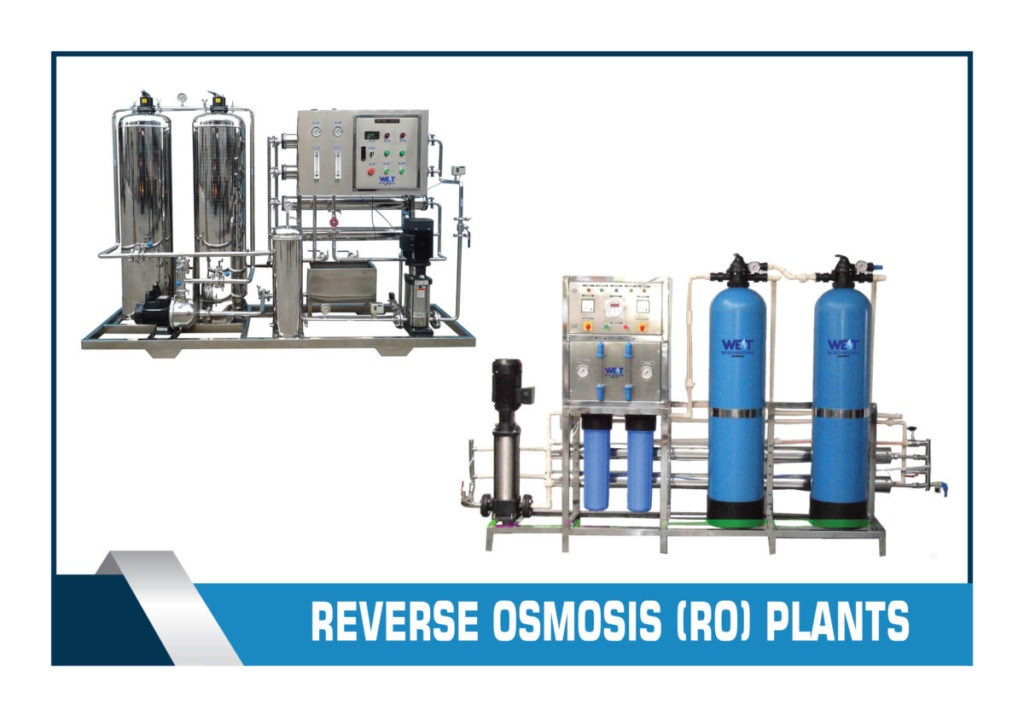
UF water treatment systems have many possible combinations between the types of membrane configurations, flow patterns, aeration and immersion. View our for more information about these design considerations for an ultra filtration system Basic of Ultra filtration article . Each has its own advantages that would work for a certain industrial / commercial application, and disadvantages that would work against it. Therefore, when choosing an ultra filtration system for an industrial or commercial water treatment application, there are few important things that can help you determine which configuration is optimal for your application.
What is in your water?
The most obvious and important factor that determines how you treat your water / wastewater is what is in your water. Different pollutants require different emission allowances based on their size, concentration and effects on the chemistry of the liquids.
Particle size:
The dimensions of the smaller contaminating particles determine the pore dimensions of the selected membrane. Ultra filtration membranes vary from 0.1 to 0.01 microns which is most probably equals to industrial Ro plant . A general rule of thumb is to select a membrane with pores of one tenth the size of the smallest particles to be filtered. This allows smaller particles to pass through the pores, but larger particles are stuck to the surface and do not nestle in the pores. This makes maintenance of the solid surface layer easier with a cross-flow and also makes backwashing more effective.
Concentrations:
The concentration of solids in the raw water will determine some design parameters for the configuration of the UF water treatment system. Whether the flow is transverse or dead end and inside out or out. Lower concentrations of solids are ideal for a dead-end flow inside out. Dead-end flow requires less energy to produce than cross-flow and inside-out flow has more uniform flow properties.
It all has to do with how quickly the membrane builds up solids on its surface layer. High loads in dead-end configurations will quickly build up a layer because every piece of organic solid remains on the membrane. Inside-out flow, especially for hollow fiber and tubular membranes, can completely clog the permeate tubes over time.
On the other hand, cross-flow will carry excess solids parallel to the membrane instead of depositing them directly on the surface. This ensures longer durations in very solid loading situations. External streams do not have an inner circumference for silting up.
Chemicals, pH and temperature:
Different membrane materials have different resilience to rougher effluent conditions. In general, polymeric membranes are less expensive, but they can be much more sensitive to degradation in the presence of very basic or acidic pHs or higher temperatures. However, ceramic membranes can handle a wider variety of conditions, but are much more expensive. There are different types of polymeric membranes and some can be used in more volatile conditions, but a ceramic membrane can tend to last much longer without replacement.
For further information click here : Ro plant price in Pakistan
 watertreatment