Flushing reverse osmosis membranes at home
On the Internet, you can find many stories about how to restore the reverse osmosis membrane at home. To begin with, we say that we do not recommend performing any manipulations, but simply changing the membrane element once a year.
To understand why we do not recommend doing such manipulations on our own, we will understand the reasons for clogging the membranes.
The water that is sent for treatment to water filtration plant or an water softener plant contains a large amount of pollutants. During the cleaning process, clean water with a minimum salt content passes through the membrane and is supplied to the user, the rest of the water with a large amount of contaminants is discharged into the sewer. But it is important to understand that some of the substances linger on the membrane. When a lot of these substances accumulate, the filter performance decreases, and in the end, the water simply does not clean and completely goes into the sewer.
Chemistry of pollution:
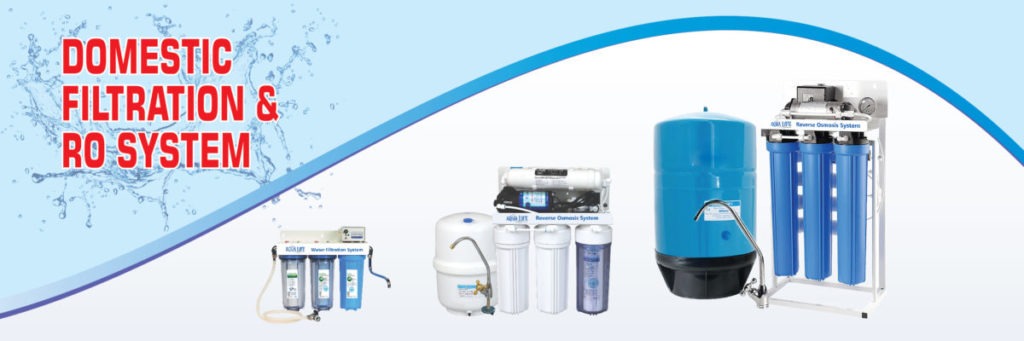
- Your membrane filter is essentially a small copy of a large water treatment system.
- To service industrial reverse osmosis membranes, two types of flushing are used – current and chemical.
- During the current backwash, most of the contaminant particles are washed away from the surface of the membrane sheet.
- But despite the fact that it is carried out regularly, some of them still stick to the membrane. It is worth noting that these substances are divided into groups and washed off by various chemical reagents.
There are four main subgroups of pollution:
- Colloidal impurities – clay particles, coal dust and other impurities that have passed through pre-filters.
- Inorganic salts – calcium and magnesium carbonates, iron, manganese and other metal compounds that create dense deposits in the membrane structure.
- Organic substances of predominantly natural origin create mucus in the interlayer space of the membrane, which leads to the same effect.
- Biological fouling are colonies of algae and microorganisms that settle and multiply in the membrane body.
Mineral deposits of inorganic salts can be washed off using acidic reagents. Organic and colloidal impurities, as well as microbiological fouling, are washed out by alkaline substances. It is worth noting that all such substances are quite aggressive, therefore, they are used taking into account the safety precautions by trained personnel.
For further information click here : Ro plant price in Pakistan
 watertreatment