Ensure the absence of biological fouling in boilers and cooling systems. They have a non-oxidizing effect.
Complex reagents:
They are mixtures that perform a number of functions – corrosion protection, prevention of precipitation, biocidal action. Perhaps today these are the most used trade names, since they provide a comprehensive action and reduce the amount of equipment for dosing.
Below we will list the products for the protection of water heating and cooling equipment, which can be found in our online store.
Dosing systems:
This is a device for the continuous supply of solutions of the necessary reagents to pipelines or containers. They represent a container filled with a reagent solution, into which a hose connected to the pipeline through the pump dispenser drops. It is a special valve and controller on which the amount of introduced reagent is set. In order to prevent the dry running of the dispenser, a level sensor is provided. A flow meter may also be provided to control the amount of substance to be dosed.
It is worth noting that the use of reagents is a mandatory parameter when using any water filtration plant. But the type of reagents and their quantity depend on the quality of make-up water.These substances are used to bring water to recommended levels. They are introduced into the water by metering stations, which are a tank filled with a reagent solution for boilers with a metering pump supplying a given amount of reagent to the pipeline. Now let’s talk about reagents and boiler protection systems.
Deoxidants:
Reagents for binding dissolved oxygen in boiler water to prevent corrosion processes. They are based on sulfites, tannins, volatiles, isoascorbic acid and its salts.
The principle of operation of binders is that water oxygen oxidizes the reducing groups and, accordingly, is included in the structure of the substance. During oxidation, alkali metal sulfites form sulfates, therefore they are mainly used in low and medium pressure boilers, since they can form precipitates. Due to the introduction of alkali metal ions, the solutions have a pH in the range of 11-13, which allows the reagent to be used in parallel as an alkalizing agent.
Tannin-based deoxidants are organic substances, most often – Quebracho extract. Initially, the pH of such reagents is acidic. Their advantage is that they do not lead to increased foaming.
Reagents for neutralizing carbon dioxide:
The CO2 neutralizing agents are based on amines that can neutralize carbon dioxide and / or form a film on the inside of the heat exchanger. The film is a monomolecular layer that prevents the contact of oxygen and free carbon dioxide with the surface of the pipes.
Reagents for binding hardness salts:
These are substances that form soluble complexes with metal ions and, accordingly, prevent the formation of precipitation of calcium and magnesium carbonates on the surface of boilers. Mostly these are phosphates and trilon-B.
PH adjusters or alkalizers :
When added to water, such reagents for boilers increase its pH to the required values. These are neutralizing amines, in particular cyclohexylamine and alkali (sodium hydroxide).
Particularly noteworthy are the stages of post-processing or final correction of permeate. As part of household reverse osmosis systems, these stages are implemented using various post-filters installed on the supply line of purified water from the storage tank to the tap. There are various options for post-filters with which manufacturers complete household reverse osmosis systems, but in practice they all perform three different functions:
1. Correction of the taste of water;
2. Ensuring the microbiological purity of drinking water;
3. re mineralization and pH adjustment.
Let us consider in detail each of the problems solved by various options for post-processing permeate in household reverse osmosis systems or in some industrial Ro plant.
Almost all household osmosis uses post-treatment of permeate with activated carbon obtained from coconut shells. For this purpose, the reverse osmosis system is equipped with the so-called post-carbon – encapsulated filter, filled with high quality coconut activated carbon. When water passes through this filter, the correction of important organ oleptic indicators of water quality – taste and smell occurs. Post carbon can improve the taste of water for those consumers who find the permeate to be tasteless, and also eliminates possible odors associated with storing water in the storage tank.
The question of the need to ensure microbiological purity of water after a storage tank in household reverse osmosis has arisen relatively recently. To solve it, routine maintenance of the system with flushing the tank with disinfecting reagents is usually carried out. The problem of the presence of microorganisms in water can be solved using certain methods of post-treatment of water.
One such method is the disinfection of water using ultraviolet radiation. This physical method, used for many years, is not only highly effective, but also has no negative effect on the chemical composition of purified water. Until recently, the widespread use of UV was significantly hindered by the high cost and energy costs of the method, today a large assortment of lamps of different capacities, including LED (UV– LED) disinfectants, allows its use in a variety of fields. UV lamp is almost an ideal option for household water treatment. Compact and ergonomic, they are easy to install in cleaning systems, ensuring trouble-free operation and effective disinfection of water. Another physical method of water disinfection that can be used in local water treatment is ultra filtration. The essence of water disinfection using ultra filtration is that when water passes through a semi permeable membrane with a pore size of 0.001 to 0.1 μm, various impurities are retained: colloids, organic substances, algae and most microorganisms. More recently, this method was mainly used to remove colloidal impurities and suspensions on an industrial scale. Now, interest in its use for removing microorganisms in household water treatment has significantly increased.
Today, various companies produce compact, easy-to-use ultra filtration cartridges, which are not inferior to UV lamps in terms of disinfection efficiency. Cartridges of this type are recommended to be used after the storage tank of household reverse osmosis systems for the post-treatment of water from possible microbiological contamination.
The salinity of household osmosis permeate does not exceed 15–20 mg / l. In recent years, the global medical community has recognized that de mineralized water does not harm human health. However, the taste of such water differs significantly from the usual. It is to ensure the possibility of choosing the composition of purified water that there is such an option for household reverse osmosis systems as a mineralizing post-filter or mineralizer. Mineralizer in the General case is a filter filled with crumbs of various natural minerals. Reverse osmosis permeate, characterized by a pH of 5.8-6 and low salinity, when in contact with such crumbs, slowly dissolves it and is saturated with salts of calcium, magnesium, sodium and potassium to a level of 50-100 mg / l. In addition, the permeate acidity is corrected – the pH value rises to 6.5–7
The amount of concentrate discharged into the sewer during cleaning is provided by a flow restrictor. For correct operation of the system, the flow limiter must correspond to the size of the installed membrane. From this, it would seem, it follows that the discharge of concentrate into the sewer during operation of the reverse osmosis system or industrial Ro plant is a constant. However, the amount of water purified by the reverse osmosis membrane depends on the pressure at the inlet of the membrane element – the higher the pressure, the more permeate penetrates the membrane barrier. On the other hand, the amount of water accumulated in the tank before the auto regulator shuts down the system depends on the air pressure in the corresponding section of the membrane tank – the lower the pressure, the more water is collected in the tank – and the pressure of the source water in the water supply. For reference: the recommended air pressure in the storage tank is 0.6–0.8 atm. Therefore, it is impossible to talk about some fixed value of discharge into the sewer per liter of purified water – too many parameters affect this value. In order to evaluate the effect of the above parameters on the permeate-concentrate ratio in household reverse osmosis, it is useful to consider the data obtained from the operation of a reverse osmosis system with a Dow Filmtec TW30-1812-50 membrane element with a nominal capacity of 50 gallons, or 189 liters, in day, at various values of the pressure of tap water and air pressure in the tank. From the above data shows that at low values of the water pressure in the water supply system, the reverse osmosis system discharges significant amounts of concentrate, reaching almost 15 liters per 1 liter of purified water. It is unlikely that such a system can be considered rational. With increasing water pressure, the discharge of concentrate per unit volume of purified water decreases, reaching a minimum value of 7 liters at an inlet pressure of 5 bar. Are there solutions to reduce the amount of concentrate discharged? Yes, such solutions exist, and one of them is the use of a reverse osmosis system with a pump. Since the flow restriction of the concentrate provides a constant discharge into the sewage system, which is practically independent of pressure, the use of a pump allows you to “push” through the membrane more water. On the one hand, the use of a pump will reduce discharge into the sewers. On the other hand, such intensification of purification will lead to faster contamination of the membrane element and pre filters. Even the minimum received value of the discharge into the sewer may seem quite large. However, it should be remembered that household reverse osmosis is a way of post-treatment of drinking water used by humans in limited quantities – up to 3-5 liters per day. Therefore, the total discharge into the sewer will be relatively small, commensurate with the overspending of water for several extra flushing of the toilet per day. Compensation for this cost overrun will be the high quality and safety of drinking water in the house.
The need to use a storage tank as part of a industrial Ro plant system is due to the low productivity of household reverse osmosis membranes. For example, if a TW30-1812-50 membrane is installed in the system with a capacity of 7.9 liters per hour, then a 200 ml glass will fill up for more than one and a half minutes. The accumulation of water in the membrane tank allows you to ensure a sufficient supply rate of drinking water from the tap to the consumer. The tank is connected to the membrane outlet through a special device called an auto regulator, and a check valve integrated into the fitting, which is screwed into the outlet of the membrane body. After the auto regulator, a tee is installed, through which the tank is connected to the filtration module using the yellow tube. After filling the tank, the auto regulator shuts off the water supply from the pre filters to the membrane, and the system is disconnected from the water supply. After opening the tap for purified water, the water pressure in the storage tank drops, the auto regulator automatically opens the water supply from the pre filters to the membrane and the process of water purification and filling the storage tank starts again. The purified water from the storage tank is supplied to the consumer through a special faucet-facet installed next to the tap water tap at the sink. There are various sizes of storage tanks, allowing you to make a choice of system configuration depending on water consumption. The reverse osmosis systems of most manufacturers are equipped with water-air tanks, in which the purified water when the tap is opened is displaced by air pressure above the membrane. Some manufacturers can find water-water tanks. In their design, the displacement of purified water occurs under the pressure of tap water. The advantage of systems with such a tank is compactness. The disadvantages of such a solution are the smaller effective volume of the tank, as well as the inability to take purified water when the pressure in the water supply drops, for example, when the water is turned off.
The membrane element is the main part of the household reverse osmosis systemor industrial Ro plant membranes, which directly ensures the removal of impurities from water, therefore, especially strict requirements are imposed on its quality and efficiency.
The most important characteristics of the membrane element for household osmosis are:
membrane quality;
bonding quality of membrane sheets in envelopes;
the number and length of membrane envelopes used to make the element;
accuracy of execution operation in the manufacture of the element – the placement and fastening of envelopes.
The quality of the membrane sheet directly determines both the efficiency of removing impurities and the performance of the membrane element. For example, the presence on the surface of the membrane web of patches used to eliminate manufacturing defects of the web can lead to the passage of the source water into the permeate tube. Another common problem of web quality is its chlorination by the manufacturer. As mentioned above, active chlorine negatively affects the properties of the membrane, but this effect is ambiguous. Under the action of chlorine on the aromatic polyamide of the barrier layer, an increase in the productivity of the membrane element and an improvement in the quality of water purification are observed. However, this effect manifests itself for a short period of time at the beginning of operation, and then quickly gives way to even greater productivity growth and a sharp deterioration in the quality of water treatment. Thus, chlorination of a membrane sheet for an unscrupulous manufacturer is a simple way to temporarily improve the performance of their products, while drastically reducing their service life. Often the need for chlorination of the web to ensure acceptable operation of the membrane elements at least at the beginning of operation is associated with the manufacturer’s approach to gluing the web into membrane envelopes. Some companies practice manual glue application. An unpleasant consequence of manual gluing of the web is the fact that the glue covers a significant area of the web, thereby excluding this area from the water treatment process. Also, heterogeneous bonding of the web occurs along the entire length of the envelope, which is fraught with a possible violation of the integrity of the element. Thus, in practice, membrane elements with manual gluing are unreliable and have low performance. A much more effective option is to glue the paper into envelopes on an automated robotic line, as Dow Chemical does. The application of glue using automatic equipment allows you to create, firstly, a homogeneous gluing line that provides maximum bond strength and reduces the likelihood of leaks to a minimum, and secondly, use a minimum fraction of the membrane area for gluing, thereby ensuring maximum productivity of the membrane element. The number and length of membrane envelopes used to make the element directly affect the performance of the membrane element and its service life. When creating any membrane element to ensure the same membrane area, it is possible to use a small number of long membrane envelopes or a large number of short envelopes. The use of long envelopes simplifies the operation of attaching envelopes in a permeate tube. The disadvantage of this approach is the decrease in the productivity of the element due to the growth of the back pressure of the permeate in the channels of long envelopes and the increased contamination of such an element. Dow Filmtec membrane elements, which use short membrane envelopes, are free from these drawbacks. On the other hand, the use of more membrane envelopes in Dow elements is associated with their automatic production, in which it is possible to accurately place envelopes on a permeate tube with an equal pitch. This significantly increases the reliability of the elements compared to products of other manufacturers, in which the membrane envelopes are not uniformly placed and experience various loads during operation, which can lead to leaks.
The structure of the membrane element of the household reverse osmosis system:
During the operation of the reverse osmosis system, water is supplied to the membrane holder and enters the input of the membrane element from the end . Water moves through the channels inside the membrane element. Water pressure causes water molecules to move through the membrane, forming a permeate flow on the other side of the membrane. The channels for the movement of water are formed by the so-called concentrate spacer, which is a grid of polymer material. A similar spacer, but thinner and with a smaller cell size, is used to create channels for permeate movement inside the membrane envelopes. To remove the permeate from the membrane element, the membrane envelopes with an open (non-glued) end are attached to the perforated catchment tube, into which the permeate is removed from the permeate channels. A significant problem arising from reverse osmosis is the accumulation of trapped impurities in a thin layer of concentrate near the surface of the membrane. Due to this phenomenon, known as concentration polarization, both the cleaning quality and the performance of the membrane element are significantly impaired, and the service life is also reduced. To minimize the negative effects of concentration polarization in the membrane element, a concentrate spacer is used, which ensures turbulization of the flow and due to this high-quality mixing of the concentrate in its entire volume. After the membrane element, permeate enters the storage tank. The concentrate is discharged into the sewer through a flow restrictor. The flow limiter is a special device that provides a constant flow rate of the concentrate and thereby maintains a constant required water pressure in the membrane holder.
Why do we need water pre-treatment and how does it happen?
The quality of pre-treatment of water before feeding it to the industrial Ro plant membrane is of great importance, since the life of the membrane element depends on it. It must be remembered that the domestic reverse osmosis system is intended for the post-treatment of tap water previously purified at centralized stations, or water that has been purified at local water treatment plants. Household reverse osmosis systems are not intended for direct purification of water from a well or well, since in most cases such water contains significant amounts of various impurities – iron and manganese, hardness salts, natural organic substances and others. All these impurities are effectively removed by reverse osmosis, but very quickly disable the most expensive element of the system – the reverse osmosis membrane .Therefore, the purification of unprepared water using household reverse osmosis is primarily impractical from an economic point of view. Pollution of the membrane of domestic osmosis due to water treatment of inadequate quality
At the pre-preparation stage in household systems, mainly three cartridge filters (prefilters) are used :
1. Polypropylene mechanical filtration cartridge with a filtration rating of 5-10 microns, designed to remove all kinds of mechanical impurities found in tap water – grains of sand, rust and scale particles and other particles. Removing such impurities extends the life of subsequent cartridges and the system as a whole. The service life of a mechanical filtration cartridge depends on the turbidity of the treated water and averages 3–6 months. Untimely replacement of a cartridge clogged by accumulated mechanical impurities can lead to a decrease in water pressure at the inlet to the membrane element and, as a result, to a decrease in system performance.
Types of filtration cartridges: a) polypropylene cartridge for mechanical filtration; b) a granular activated carbon cartridge; c) cartridge type “carbon block”
2. A cartridge with granular activated carbon to remove natural organic substances and active chlorine from tap water that adversely affect the reverse osmosis membrane. In this case, both coconut and bituminous activated carbon can be used as a filler cartridge. The first refers to microporous coals and effectively removes impurities of active chlorine and organochlorine compounds from water, the second is mesoporous and is very effective for removing natural organic compounds contained in surface waters and tap water obtained from them. The life of a granular activated carbon cartridge is also an average of 3–6 months. The actual resource of this cartridge depends on such indicators of quality of the treated water as oxidizability and color. Untimely replacement of the cartridge at this stage can lead to clogging of the membrane element, the development of microorganisms on the membrane surface due to the breakthrough of nutritious natural organics through an exhausted layer of activated carbon. In turn, this will shorten the life of the membrane element and can degrade the quality of water treatment.
3. In the third stage, various cartridges can be used, depending on the type of reverse osmosis system. In the case of low-cost systems, a polypropylene cartridge with a filter rating of 1 or 5 microns is used at this stage to remove particles of coal that can be washed out of the previous cartridge, as well as possible residual mechanical impurities. In higher-class systems, a cartridge is installed using briquetted activated carbon (carbon block), which provides not only mechanical filtration, but also additional purification from chlorine and organ chlorine. The service life of the cartridge of the third stage of pre filtration is 3-6 months. Thus, all three cartridges are replaced at the same time, which simplifies the use of a household reverse osmosis system.
What reverse osmosis systems exist and how do they differ?
For a long time, practically the only field of application of reverse osmosis technology was industrial water treatment, where there was a need to obtain significant quantities of high-quality purified water with minimal energy, reagents and, most importantly, with the most complete use of source water as a raw material.
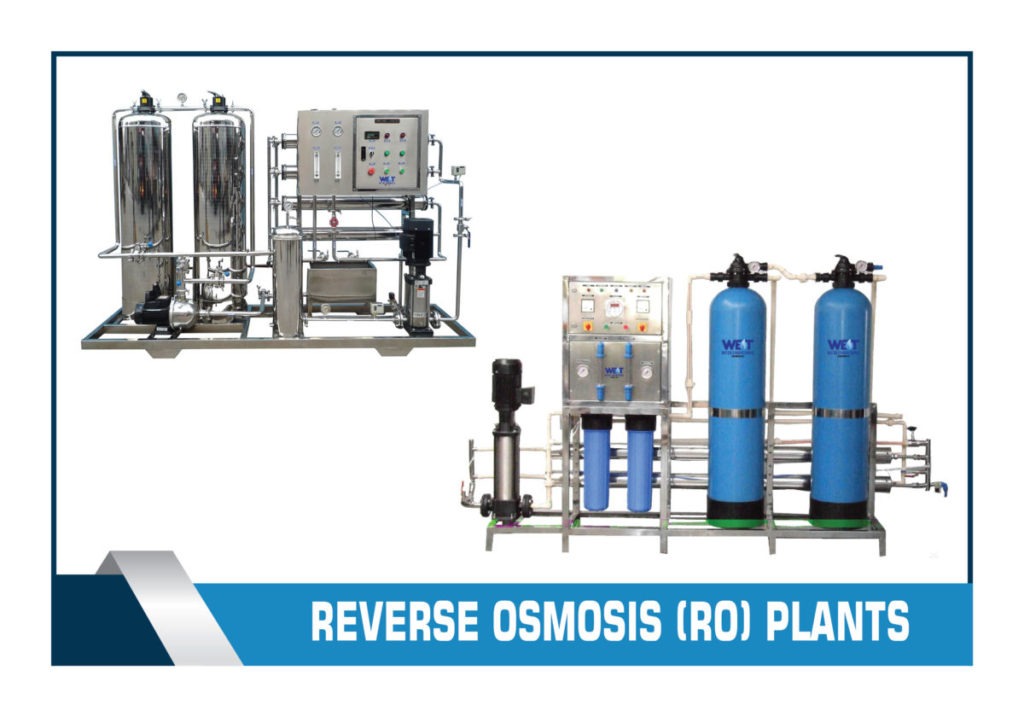
In most cases, industrial reverse osmosis systems are built on the basis of schemes using concentrate recycling — returning part of the concentrate to the unit inlet and mixing it with the source water. The advantage of such schemes is a high yield of permeate – 50% –75%, and in some cases up to 90%. However, such efficient use of water can only be achieved through the use of powerful pumping equipment, which allows achieving high working pressures of tens of atmospheres, appropriate piping and fittings, as well as instrumentation and automation. In addition, industrial Ro planttechnology for water purification includes multi-stage pre-treatment using various reagents, as well as mandatory membrane washing procedures. It is obvious that the domestic use of reverse osmosis eliminates the use of such complex operations and equipment. Therefore, when creating household reverse osmosis systems intended for the purification of small amounts of drinking water, they had to abandon the high permeate yield for the sake of compactness, simplicity of construction and operation, reliability, noiselessness and, not least, low cost. For this reason, for household reverse osmosis systems, the permeate yield value is small and, as a rule, is at the level of up to 10%.
Membrane elements for household reverse osmosis
A membrane element is a device that includes a reverse osmosis membrane and components that ensure its effective use. In household reverse osmosis systems, rolled membrane elements (Fig. 6) of size 1812 are used, which corresponds to a diameter of 1.75 inches (44.5 mm) and a length of 11.74 inches (298 mm).
3. collection of purified water in the storage tank;
4. post-treatment or finish water treatment.
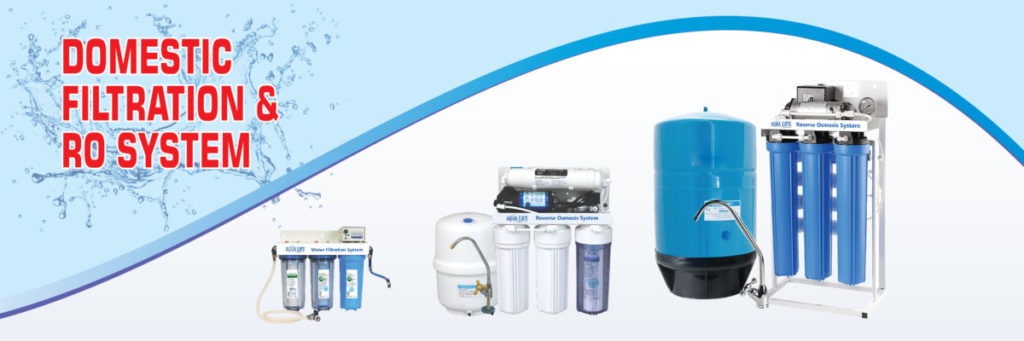
Let us briefly consider the structure and principle of operation of a household reverse osmosis system. The filter is connected to the cold water supply pipe using the inlet coupling 4 and the water supply tap 5.
Scheme of connecting the reverse osmosis system as standard: 1. Filtering module; 2. Tank; 3. Tap for purified water; 4. Input clutch; 5. Water tap; 6. Ball valve of the tank; 7. Colored tubes; 8. Drain clamp; 9. Key for pre filter housings; 10.1. Mechanical cleaning polypropylene cartridge (5 microns); 10.2. Activated carbon cartridge; 10.3. Carbon block; 10.4. Post filter; 10.5. Membrane element; 11. Tee; 12. Auto flow control
A red tube connects the water supply tap and pre filter 10.1 of the filtration module. The incoming water first goes through three stages of pre-treatment in the pre-filters 10.1, 10.2, 10.3. After passing the preliminary treatment, water enters the reverse osmosis membrane 10.5, which is located in a special case. The membrane housing has an inlet, which is connected through an auto regulator to the pre filter 10.3, and two outlets: one for permeate and one for concentrate.
After the membrane, the water flow is divided into two parts – the concentrate is discharged into the sewer, and the permeate enters the storage tank 2 and is stored there. The tank is connected to the membrane outlet through an auto regulator and a check valve integrated into the transition fitting, which is screwed into the outlet of the membrane body. After the auto regulator, a tee is installed, through which the tank is connected to the filtration module using the yellow tube. A ball valve 6 is installed on the upper nozzle of the tank.
After filling the tank, the auto regulator shuts off the water supply from the pre filters to the membrane, and the cleaning process stops. After opening the tap for purified water 3, the water pressure in the storage tank drops, the auto regulator automatically opens the water supply from the pre filters to the membrane, and the tank is refilled. The concentrate is fed into the sewer through the outlet of the membrane housing, connected by a black pipe with a drain clamp 8, which is installed on the sewer pipe.
From the storage tank, purified water through the tee 11 passes to the last cleaning stage – post-filter 10.4. The post-filter using a blue tube connects to the tap of purified water 3, which is installed directly on the sink or kitchen worktop.
What determines the price of household reverse osmosis?
From the above information it can be seen that there are various options for reverse osmosis systems ,household Ro plant, industrial Ro plants etc. which differ in configuration, the presence of various options, and so on, which certainly affects their price. However, on the market you can often find products of different brands, which, with the same type of equipment, have significant differences in price. Most consumers have a logical question – what is the reason for the difference in price and is it worth paying?
As an example, we can consider the membrane element as the basis of the entire system. Inexpensive reverse osmosis systems are usually equipped with membrane elements from little-known manufacturers. For such membrane elements, the problems discussed above with the chlorination of the fabric, patches, and poor-quality adhesive joints are typical. All this does not add reliability to the system. In addition, such elements may have lower performance and selectivity compared to products from leading manufacturers. On the contrary, in more expensive reverse osmosis systems, it is most likely that Dow Filmtec membrane elements are found that have the best performance in terms of performance to selectivity and provide better cleaning quality. A similar situation is observed for pre filter cartridges. In low-cost systems, it is most likely to encounter Chinese-made cartridges, which often show a high filtration rate with an unsatisfactory quality of water purification from impurities. Therefore, with such cartridges the membrane service life is significantly reduced, the quality of cleaning as a whole is deteriorated. In this case, a situation arises when the attractively low initial cost of the system leads to more frequent replacements of cartridges and, consequently, to large maintenance costs. And vice versa – more expensive solutions, equipped with high-quality cartridges and membranes, require less frequent maintenance and are cheaper. We should not forget about the post-treatment, especially about the re mineralization of water. The effectiveness of this process is determined by the nature of the minerals used and the time of contact with water. Since water re mineralization is carried out at the final stage of the purification process, the purity of the minerals used and the absence of toxic impurities in them are extremely important. In general, post-treatment of water is the most critical stage in household reverse osmosis, as it determines the safety of the water supplied to the consumer. This should be borne in mind when choosing the manufacturer of the system you are buying. A separate point in the distinction between cheap and expensive solutions is the question of the quality of systems. As a rule, not only the high efficiency of their work, but also the high reliability of the reverse osmosis system is behind the higher price of components. A thorough check by the manufacturer of his products for work under pressure, resistance to water hammer and other difficult tests that the product passes in the quality control department is a guarantee of the absence of problems with flooding of neighbors, loss of water and other troubles. And you also have to pay for it.



 watertreatment